
Why Is My Furnace Blowing Cold Air Troubleshooting Tips for Homeowners
A furnace blowing cold air can make a normal winter morning feel urgent fast. The good news is that the cause is often simple, and a few safe checks can tell you whether it is a quick fix or time to call an HVAC professional.
Cold air from the vents does not always mean the furnace has failed. Sometimes the thermostat is set wrong, the filter is clogged, or the system is moving air before the burners have warmed up. Other times, the issue points to ignition trouble, duct leaks, or a safety shutdown.
Here is how to sort through the most common causes without panic.

Start with the thermostat because small settings can cause big confusion
The thermostat is the first place to check because it controls when the furnace heats and when the blower fan runs. A small setting change can make the system feel like it is broken.
Look for these common issues:
The fan is set to `ON`
When the fan is set to `ON`, it runs even when the furnace is not actively heating. That means air may come through the vents at room temperature, which feels cold in winter.
Switch the fan setting to `AUTO`. In this mode, the blower should run mainly during a heating cycle.
The thermostat is set to cool
It sounds obvious, but it happens. Make sure the mode is set to `HEAT`.
The temperature setting is too low
Raise the set temperature a few degrees above the current room temperature. Wait several minutes to see if warm air starts.
The batteries are weak
Some thermostats rely on batteries. If the screen is dim, blank, or slow to respond, replace the batteries and reset the heating mode.
After making changes, give the furnace a little time. Many systems start the blower before the air feels fully warm, especially at the beginning of a cycle.

Check the air filter because airflow affects heat
A clogged air filter can restrict airflow through the furnace. When that happens, the furnace may overheat internally and shut off the burners as a safety measure. The blower may keep running, pushing cooler air through the home.
This is one of the most common and preventable reasons for cold air.
To check the filter:
Turn the furnace off at the thermostat.
Locate the filter slot near the furnace or return air duct.
Slide the filter out and look at it under good light.
Replace it if it looks gray, dusty, or matted.
Make sure the airflow arrow on the new filter points in the correct direction.
Most homes need filter changes every 1 to 3 months, but the timing can vary. Pets, dust, remodeling, wildfire smoke, and heavy furnace use can clog a filter faster.
If the furnace starts blowing warm air after a filter change, monitor it for the next few cycles. If it shuts down again, another issue may be causing overheating or poor airflow.
Look for pilot light or ignition problems
Gas furnaces need a steady ignition source to create heat. Older furnaces may use a standing pilot light. Newer models usually use electronic ignition.
If the furnace blower runs but the burners never light, the vents may push cold air.
For an older furnace with a pilot light, check whether the flame is out. The access panel may have instructions for relighting it. Follow those instructions exactly. If the pilot will not stay lit, stop trying and call a professional. The problem could involve the thermocouple, gas supply, or another safety component.
For newer furnaces, ignition problems may show up as:
Clicking sounds without ignition
Short heating attempts followed by shutdown
Flashing error lights on the furnace control board
Burners that light briefly, then turn off
You can safely check whether the furnace switch is on and whether the breaker has tripped. Beyond that, ignition repairs should be handled by a trained technician.
If you smell gas, leave the home, avoid using switches or flames, and contact the gas utility or emergency services from a safe location.

Inspect vents and ductwork for lost heat
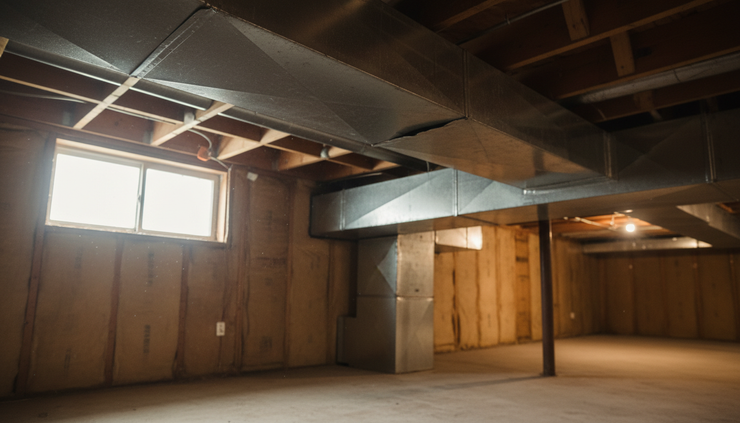
Sometimes the furnace is making warm air, but that air is not reaching the rooms correctly. Ductwork problems can let heated air escape into an attic, crawl space, basement, or wall cavity before it gets to the vent.
Signs of ductwork trouble include:
One room feels much colder than others
Airflow is weak at certain vents
You hear rattling or whistling from ducts
Utility bills rise without a clear reason
The furnace runs often but the house still feels chilly
Start with simple checks. Make sure supply vents are open and not blocked by rugs, furniture, curtains, or boxes. Check return vents too. A blocked return can reduce airflow and make the whole system work poorly.
If you can safely see exposed ductwork, look for loose connections, gaps, crushed flexible ducts, or disconnected sections. Do not crawl into unsafe attic or crawl space areas to inspect ducts. A professional can test airflow, seal leaks, and check whether the duct system is sized correctly.
This matters in cold climates, including areas around Denver, Aurora, Parker, Highlands Ranch, and Castle Rock, where a small heating problem can become uncomfortable quickly during a cold snap.
Know when the furnace needs professional help
Some furnace problems are safe to check from the outside. Others involve gas, electricity, combustion, or safety controls. That is where a licensed HVAC technician should step in.
Call a professional if:
The furnace blows cold air after basic thermostat and filter checks
The pilot light will not stay lit
The furnace starts and stops repeatedly
The breaker trips more than once
You smell gas or notice a burning electrical odor
The carbon monoxide alarm sounds
The furnace makes loud banging, grinding, or scraping noises
The heat exchanger, burners, gas valve, flame sensor, or control board may be involved
Also call for help if the home is getting dangerously cold. Freezing indoor temperatures can put plumbing at risk, especially during extended cold weather.
A technician can check combustion, airflow, electrical components, gas pressure, safety switches, and the condition of the furnace. That full system view is hard to get from a homeowner checklist alone.
A calm troubleshooting plan can save time
When the furnace blows cold air, start with the safest and simplest steps.
Check the thermostat mode, fan setting, and batteries. Replace a dirty air filter. Make sure vents are open and clear. Look for obvious duct problems only where access is safe. If the system uses a pilot light, follow the furnace instructions carefully and stop if it will not stay lit.
If those steps do not solve it, the issue may need professional diagnosis. Calling early can prevent repeated shutdowns, wasted energy, and bigger repairs.
Cold air from the vents is frustrating, but it is not always a disaster. With a steady approach, you can rule out the easy causes and know when expert help is the safest next step.


Comments