
80% vs 95%+ Furnace Efficiency for Colorado Homes Which Is Right for You
A furnace that works fine in a mild climate can feel like the wrong tool during a Colorado cold snap. Along the Front Range, homes in Denver, Aurora, Parker, and Highlands Ranch deal with chilly nights, dry air, fast temperature swings, and long heating seasons. That makes furnace efficiency more than a number on a sticker.
The basic choice often comes down to an 80% AFUE furnace or a 95%+ AFUE furnace. Both can heat a Colorado home well. The right one depends on your budget, home layout, venting, utility costs, and how long you plan to stay.

1. Know what 80% and 95%+ efficiency actually mean
Furnace efficiency is usually measured by AFUE, or annual fuel utilization efficiency. In plain English, it tells you how much of the fuel becomes usable heat.
An 80% AFUE furnace turns about 80% of its fuel into heat. The remaining energy leaves through the exhaust.
A 95%+ AFUE furnace captures more heat before exhaust leaves the system. These are often called condensing furnaces because they pull extra heat from water vapor in the exhaust.
That difference matters in Colorado because furnaces can run often during winter, especially in older homes or larger houses with leaky ductwork.
Practical tip: Do not shop by AFUE alone. Ask for a proper load calculation so the furnace matches the home, not just the square footage.
2. Compare the biggest benefit of 80% furnaces
The main advantage of an 80% furnace is lower upfront cost. The equipment is usually less expensive, and installation can be simpler when the home already has the right metal flue or chimney setup.
An 80% furnace can make sense when:
The existing furnace is also 80% efficient
The venting system is already in good condition
The home has a smaller heating load
The homeowner wants a lower initial project cost
The property may be sold in the near future
The drawback is higher fuel use over time. In a Colorado winter, that can show up month after month on heating bills. An 80% furnace also pulls combustion air from inside the home in many setups, which can affect comfort in tight or well-sealed houses.
Practical tip: If replacing an old 80% unit with another 80% unit, still have the venting inspected. Chimneys and flues can deteriorate, and safe exhaust matters as much as comfort.
3. Look at where 95%+ furnaces shine
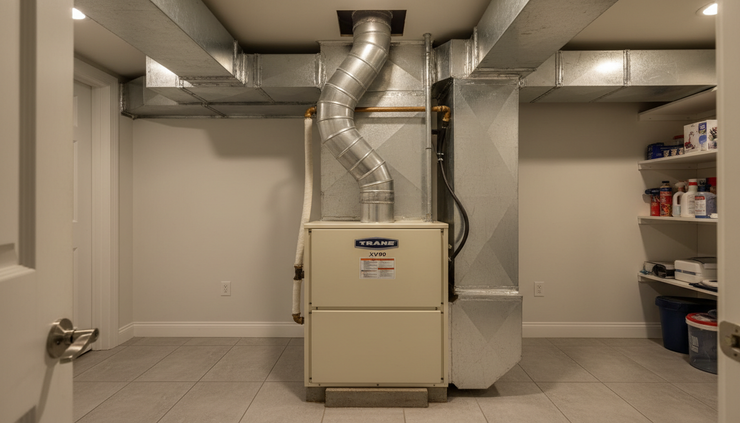
A 95%+ furnace uses less fuel to deliver the same amount of heat. That is the selling point, but comfort can be part of the appeal too.
Many high-efficiency furnaces offer sealed combustion. They draw combustion air from outside rather than using indoor air. Many also pair well with two-stage or variable-speed operation, which can provide steadier heat and quieter running.
A 95%+ furnace is often a strong fit when:
Heating bills are high
The home is occupied for many years
The house is large or loses heat quickly
Comfort varies from room to room
The owner wants better long-term efficiency
The home does not have an ideal chimney for an 80% setup
The drawback is installation complexity. A condensing furnace needs plastic venting, often through a sidewall, plus a way to manage condensate. In freezing Colorado weather, that condensate line and exterior vent termination must be installed correctly.
Practical tip: Ask where the intake, exhaust, and condensate drain will go before approving the job. Details like vent clearances and freeze protection matter.
4. Factor in Colorado’s climate before deciding
Colorado homes face a mix of conditions that can influence furnace choice.
The Front Range has cold winter nights, sunny afternoons, dry air, and sudden temperature drops. Homes at higher elevations or in wind-prone areas can have greater heating demand. Older homes near Denver may have weaker insulation or aging ducts. Newer homes in Parker or Highlands Ranch may be tighter, which can make sealed combustion more appealing.
Colorado’s dry climate can also make comfort feel different. Warm air from a furnace may feel dry, especially when the system cycles often. A properly sized furnace with good airflow can help reduce temperature swings.
In Colorado, the best furnace is not always the highest-efficiency model. It is the furnace that matches the house, venting, budget, and heating pattern.
Practical tip: If rooms heat unevenly, do not assume a bigger furnace will solve it. Duct issues, insulation gaps, and air leaks often cause comfort problems.

5. Weigh installation costs against long-term savings
An 80% furnace usually wins on initial cost. A 95%+ furnace usually wins on fuel savings.
The key question is how long it will take for lower utility bills to help offset the higher installation cost. That payback varies based on gas rates, home size, insulation, thermostat habits, and winter weather.
Here is a simple way to compare:
80% furnace
Lower upfront cost, simpler replacement in many older homes, familiar venting requirements
Best for tighter budgets, shorter ownership plans, or homes already set up well for 80% venting
95%+ furnace
Lower fuel use, stronger long-term efficiency, often better comfort options
Best for long-term ownership, higher heating use, or homes needing venting updates
Practical tip: Get quotes that separate equipment, venting, electrical work, drainage, permits, and thermostat upgrades. That makes the comparison much clearer.
6. Think about long-term performance and maintenance
Both furnace types need annual maintenance. Burners, heat exchangers, blowers, filters, safety controls, and gas pressure all need attention.
A 95%+ furnace has a few extra parts and details to maintain, including condensate components and PVC venting. That does not make it unreliable, but it does mean installation quality and service access matter.
An 80% furnace is simpler in design, which some homeowners like. Still, simpler does not automatically mean better. Poor sizing, dirty filters, weak airflow, or bad duct design can shorten the life of either type.
Practical tip: Choose the contractor as carefully as the furnace. A well-installed midrange furnace often performs better than a premium furnace installed poorly.
7. Choose based on your home, not just the efficiency rating
Use these questions to narrow the decision:
How long will the home be owned?
Are winter gas bills a major concern?
Is the existing venting safe and usable?
Does the home have comfort issues now?
Is the furnace location near an exterior wall?
Is there a good path for condensate drainage?
Has the home been recently air sealed or insulated?
For many Colorado homes, a 95%+ furnace is the better long-term choice when the budget allows and the installation conditions are right. The energy savings, sealed combustion, and comfort features can be valuable during a long heating season.
An 80% furnace still has a place. It can be a practical choice when upfront cost matters most, the current venting is in good shape, and the heating load is moderate.

The practical top pick for Colorado homes
If the home will be lived in for many years and the installation supports it, the top pick is usually a 95%+ high-efficiency furnace. It suits Colorado’s cold nights and long heating season well.
If budget, venting, or short-term ownership points the other way, an 80% furnace can still be a smart and dependable choice.
The best next step is simple: compare both options with a qualified HVAC contractor who can inspect the home, check venting, review ductwork, and calculate the right furnace size. Efficiency matters, but fit matters more.


Comments