
How Regular HVAC Maintenance Saves You Money Year After Year
A neglected HVAC system can look perfectly fine right up until it sends you a shocking utility bill, quits on the hottest weekend of July, or turns a small worn part into a four-figure repair.
That is why routine maintenance is one of the simplest money-saving habits a homeowner can build. It does not feel exciting. It is not as visible as a kitchen upgrade or new flooring. But your heating and cooling system is one of the most expensive systems in the house, and it usually works harder than almost anything else you own.
Regular tune-ups help the system use less energy, break down less often, and last longer. Over several years, those savings can easily outweigh the cost of maintenance.
This post is informational and uses typical U.S. cost ranges. Actual savings and repair costs vary by home size, system age, climate, utility rates, and equipment condition.
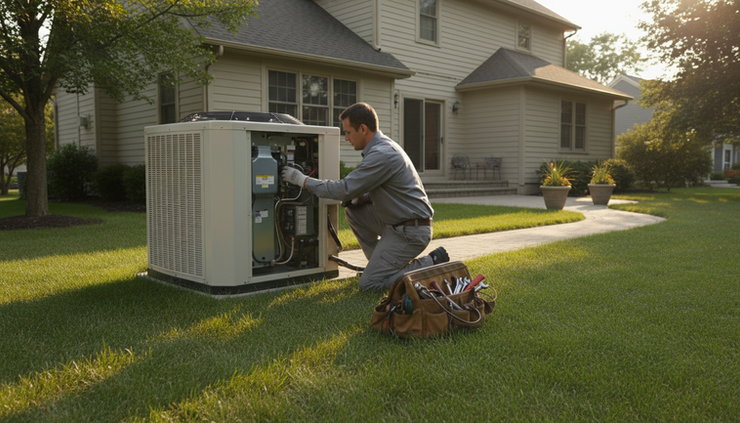
Why HVAC maintenance pays for itself
Most homeowners think about HVAC maintenance only when something goes wrong. The air feels weak. The house will not cool down. The furnace makes a strange noise. By then, the system may have been wasting energy for months.
A maintenance visit usually includes tasks like:
Cleaning or inspecting coils
Checking refrigerant levels
Testing electrical components
Tightening loose connections
Lubricating moving parts when needed
Checking airflow
Replacing or inspecting the air filter
Testing thermostat operation
Looking for early signs of wear
None of these steps sound dramatic. That is the point. Maintenance keeps small issues small.
Think of it like changing the oil in a car. Skipping one oil change may not destroy the engine. Skipping several raises the odds of expensive damage. Your HVAC system works the same way. Dust, friction, loose parts, clogged filters, and poor airflow all make it work harder than it should.
That extra strain shows up in three places:
Higher utility bills
More frequent repairs
Shorter system life
When all three are added together, the financial case becomes clear.
Lower energy bills are the first savings you notice
Heating and cooling often make up the largest share of a home’s energy use. The U.S. Department of Energy commonly estimates that heating and cooling account for around half of the energy used in a typical home.
That means even a modest improvement in HVAC efficiency can make a noticeable difference.
One of the clearest examples is the air filter. The Department of Energy has noted that replacing a dirty, clogged filter with a clean one can lower an air conditioner’s energy consumption by 5% to 15%. That is just one maintenance task.
Now add clean coils, proper airflow, correct refrigerant charge, and calibrated controls. A system that was struggling can often run more efficiently after a professional tune-up.
Here is a simple example.
If a household spends $2,000 per year on heating and cooling, a 10% efficiency improvement would equal about $200 in annual energy savings. If maintenance costs $100 to $200 per visit, a tune-up may largely pay for itself through lower utility bills alone.
The actual number can be lower or higher. A newer, well-kept system may save less because it is already running efficiently. An older or neglected system may save more because there is more lost performance to recover.
A clean filter alone can reduce air conditioner energy use by 5% to 15%, according to widely cited U.S. Department of Energy guidance.
That is why regular HVAC maintenance saves money even when nothing seems broken. The system may be “working,” but it may be using too much energy to do the job.

Tune-ups reduce the odds of expensive repairs
HVAC repairs can get expensive fast. Many breakdowns start with something minor, such as a dirty coil, worn capacitor, clogged drain line, loose wire, or failing blower component. If caught early, the fix may be simple. If ignored, the same problem can damage larger parts.
Here are typical U.S. cost ranges homeowners may run into. These are general estimates, not quotes.
HVAC expense | Typical cost range | How maintenance helps |
Routine tune-up | $75 to $200 | Finds early wear and keeps parts clean |
Capacitor or contactor replacement | $150 to $400 | Testing can catch weak electrical parts before failure |
Clogged condensate drain repair | $100 to $350 | Drain cleaning helps prevent water damage and shutdowns |
Blower motor repair or replacement | $400 to $900+ | Airflow checks reduce strain on the motor |
Refrigerant leak repair | $500 to $1,500+ | Pressure checks can reveal problems early |
Compressor replacement | $1,500 to $3,000+ | Cleaning and correct refrigerant levels reduce stress |
Full system replacement | $5,000 to $12,000+ | Maintenance can delay premature replacement |
A service visit does not guarantee nothing will ever break. Mechanical systems wear out. Parts fail. Storms happen. But inspections lower the chance of surprise failures because a technician can spot warning signs while the system is still running.
For example, a weak capacitor may still allow your air conditioner to start, but it can force the motor to work harder. Replacing it early might cost a few hundred dollars. Waiting until it fails during a heat wave could mean an emergency call, no cooling, and extra stress on connected parts.
The same idea applies to dirty evaporator and condenser coils. Dirt acts like insulation. It blocks heat transfer, so the system has to run longer. Longer run times mean higher bills and more wear. Over time, that can contribute to bigger repairs.
Maintenance can add years to your HVAC system’s life
A central air conditioner or heat pump often lasts around 10 to 15 years, while many furnaces can last 15 to 20 years or more with proper care. Climate, usage, installation quality, and maintenance all affect the actual lifespan.
Skipping maintenance does not always cause an immediate failure. It usually does something more expensive over time. It shortens the useful life of the system.
Here is why that matters.
Say a new HVAC system costs $8,000 installed. If it lasts 16 years, the rough ownership cost is $500 per year before energy and repairs. If poor maintenance causes it to fail after 12 years, that same system costs about $667 per year in equipment value.
That difference is real money. Replacing a system four years early can cost thousands sooner than expected.
Regular maintenance helps protect that investment by reducing:
Excess heat and stress on motors
Long run times caused by weak airflow
Short cycling from dirty components or control problems
Corrosion from clogged drains or moisture issues
Wear caused by loose or failing electrical parts
A well-maintained system also gives you more planning time. Instead of replacing equipment in a panic after a breakdown, you can budget for replacement when the system is nearing the end of its life.
That alone can save money. Emergency replacements often leave less time to compare options, ask questions, or wait for better timing.

Skipping maintenance creates hidden costs
Skipping maintenance can feel like saving money. If a tune-up costs $150, and you skip it, that is $150 still in your pocket. At least for now.
The problem is that deferred maintenance tends to move costs into places that hurt more.
Higher monthly bills
A dirty system runs longer to produce the same comfort. You may not notice because the change happens slowly. One summer, the AC runs a little more. Then a little more the next year.
By the time the utility bill feels clearly high, the system may have been wasting money for a long time.
More emergency repairs
HVAC systems usually fail when they are under the most strain. That means furnaces often break during cold snaps, and air conditioners often fail during heat waves.
Those are also the times when repair schedules fill up quickly. Emergency service may cost more than a routine appointment, and parts can be harder to get during peak demand.
Water damage
Air conditioners and high-efficiency furnaces produce condensation. If the drain line clogs, water can back up and leak into floors, walls, ceilings, or nearby equipment.
A basic drain cleaning is usually minor. Water damage is not.
Poor comfort and uneven temperatures
A poorly maintained system may still run, but it may not heat or cool evenly. Some rooms feel fine, while others stay uncomfortable. That often leads homeowners to lower the thermostat in summer or raise it in winter, which increases energy use.
Warranty problems
Many HVAC warranties require proper maintenance. If a major part fails and there is no record of care, the manufacturer or installer may deny coverage. That can turn what might have been a covered repair into an out-of-pocket expense.
Keep receipts and maintenance records. They can be useful for warranty claims, future service, and even home resale.
What homeowners can realistically save
There is no single savings number that applies to every house. Still, it is possible to sketch a realistic range.
A typical homeowner who schedules routine maintenance may save through:
Lower energy use
Fewer avoidable repairs
Longer equipment life
Reduced emergency service calls
Better warranty protection
For many homes, annual energy savings alone may fall somewhere around 5% to 15% of heating and cooling costs, especially if the system was dirty or overdue for service. If heating and cooling costs $1,500 to $2,500 per year, that could mean about $75 to $375 per year in energy savings.
Repair savings are less predictable, but often larger when they happen. Catching a small issue early might save a few hundred dollars. Preventing compressor damage, water damage, or premature replacement can save thousands.
Here is a simple way to think about it.
If maintenance helps you avoid | Possible financial impact |
One emergency service call | $100 to $300+ saved |
One major repair | $500 to $3,000+ saved |
10% excess energy use | $150 to $250 saved per year on a $1,500 to $2,500 HVAC energy budget |
Replacing a system several years early | Thousands delayed or avoided |
The best part is that maintenance does not need to be complicated. Most homes do well with a professional tune-up once or twice per year. Many homeowners schedule AC service in spring and furnace service in fall.
Between visits, filter changes matter. Some filters need replacement every 30 days, while others last 60 to 90 days or longer. Homes with pets, allergies, heavy dust, or frequent system use may need more frequent changes.
The best times to schedule HVAC maintenance
Timing makes a difference. The goal is to service the system before peak season, not during it.
For cooling systems, spring is usually best. A technician can clean and test the AC before hot weather arrives. If repairs are needed, there is more time to handle them before the system is running every day.
For heating systems, fall is ideal. The furnace or heat pump can be inspected before the first serious cold spell.
A simple schedule looks like this:
Spring Service the air conditioner or heat pump cooling mode.
Fall Service the furnace or heat pump heating mode.
Every 1 to 3 months Check the air filter and replace it when dirty.
Year-round Keep outdoor units clear of leaves, grass clippings, weeds, and debris.
Homeowners can do some visual checks, but a professional tune-up is still worth it. Electrical testing, refrigerant checks, combustion safety checks, and deeper diagnostics require training and proper tools.

Small maintenance habits that protect your budget
Professional tune-ups do the heavy lifting, but a few simple habits can help between visits.
Change filters before they get packed with dust. A clogged filter restricts airflow and forces the system to work harder.
Keep vents open and unblocked. Furniture, curtains, and rugs can interfere with airflow.
Clear space around the outdoor unit. Aim for at least a couple of feet of clearance around the condenser when possible.
Pay attention to new sounds. Grinding, buzzing, rattling, or squealing should not be ignored.
Watch for weak airflow. It can point to filter issues, duct problems, blower trouble, or frozen coils.
Do not ignore short cycling. If the system turns on and off quickly, something may be wrong.
These habits cost little or nothing, but they help your system run with less strain.
The real savings come from prevention
Regular HVAC maintenance is one of those home expenses that can feel optional until it suddenly is not. The system may run without attention for a while, but dust, wear, and small faults keep building in the background.
A routine tune-up can lower energy use, reduce repair risk, help your equipment last longer, and protect you from some of the most frustrating surprise costs of homeownership.
If you want the smartest place to start, keep it simple. Replace dirty filters, schedule service before peak heating and cooling seasons, and save your maintenance records.
A comfortable home is great. A comfortable home with lower bills and fewer breakdowns is even better.


Comments