
Heat Pump vs Furnace for Colorado Winters Which Is Best for Your Home
Colorado winters can be sneaky. One day the sun is melting snow off the driveway, the next morning it is 8°F and your heating system is doing all the work. That swing is exactly why the heat pump vs furnace question matters here.
A furnace has been the default choice in many Colorado homes for decades, especially where natural gas is available. Heat pumps are getting more attention because newer cold-climate models perform much better than older ones, and they can heat and cool from one system.
So which one makes more sense? The honest answer depends on your climate zone, fuel costs, insulation, electrical setup, and comfort expectations. Let’s walk through the real-world tradeoffs.

How heat pumps and furnaces create heat
A furnace makes heat. A heat pump moves it.
That one difference explains most of the cost, comfort, and performance questions.
A gas furnace burns natural gas or propane, then sends warm air through the ductwork. An electric furnace uses electric resistance heating, which works like a giant toaster. Gas furnaces are common in Colorado because they can deliver strong heat during very cold weather.
A heat pump uses refrigerant and electricity to pull heat from outside air and move it indoors. That sounds strange when it is cold outside, but outdoor air still contains heat energy even below freezing. The heat pump captures that energy and transfers it inside.
In summer, the same system reverses direction and works like an air conditioner. That is a big reason many homeowners consider one.
The main difference feels like this:
Furnace
Heat pump
Delivers hotter air quickly and feels familiar during deep cold.
Runs longer at lower output and uses electricity to move heat efficiently.
A furnace often produces supply air that feels very warm at the vent. A heat pump usually produces gentler heat. It can keep the home comfortable, but the air coming out may not feel as hot on your hand.
That does not mean it is failing. It just heats differently.
Colorado winters are not the same everywhere
A home in Denver faces a different heating challenge than a home in Leadville, Steamboat Springs, or the foothills west of Boulder. This is where broad advice can get misleading.
Colorado has several winter realities:
Sunny winter days can reduce heating demand.
Nights can drop sharply, especially after a clear day.
Front Range homes may see cold snaps mixed with mild stretches.
Mountain homes can face longer periods below freezing.
Wind and poor insulation can make a house feel colder than the thermostat shows.
For many Front Range homes, a modern cold-climate heat pump can handle a lot of the heating season. In places with long subzero stretches or homes at higher elevations, the calculation gets tougher.
A useful way to think about temperature ranges is:
Outdoor temperature | Typical heat pump performance |
Above 40°F | Very efficient and usually comfortable |
25°F to 40°F | Still efficient for many homes |
10°F to 25°F | Cold-climate models can perform well, but sizing matters |
Below 10°F | Capacity drops, and backup heat may be needed |
Below 0°F | A furnace or auxiliary heat often becomes more important |
These ranges are general. The actual performance depends on the model, the home, and the design of the system.
A newer cold-climate heat pump can often keep producing heat at very low temperatures. The question is not only whether it can run. The bigger question is whether it can produce enough heat to match what the house is losing.

Efficiency looks different for each system
Furnaces and heat pumps use different efficiency ratings, so comparing them can feel a little messy.
A gas furnace is usually rated by AFUE, which stands for annual fuel utilization efficiency. A high-efficiency gas furnace may convert most of its fuel into usable heat. Some older furnaces waste more heat through the flue.
A heat pump is often discussed in terms of COP, or coefficient of performance. Instead of turning electricity directly into heat, it uses electricity to move heat. That means it can deliver more heat energy than the electrical energy it consumes.
In mild to cool weather, a heat pump can be extremely efficient. In colder weather, it has to work harder. As the outdoor temperature drops, its efficiency falls and its heating capacity drops with it.
That is why a heat pump can be a great fit for a 35°F day and still need help on a 0°F night.
This matters in Colorado because the heating season includes a lot of in-between weather. Many winter hours are cold, but not brutally cold. During those hours, a heat pump may use energy very efficiently.
For deep cold, a furnace still has a major strength. It can keep delivering high heat output without the same decline in capacity that an air-source heat pump faces.
Comfort is about more than the equipment
The heating system matters, but the house matters too.
A well-insulated, air-sealed home gives a heat pump a much better chance to shine. If the home holds heat well, the heat pump does not need to produce huge bursts of warm air. It can run steadily and maintain comfort.
A leaky home is harder. Cold air slips in around rim joists, attic hatches, recessed lights, old windows, and poorly sealed doors. In that setting, a furnace can sometimes mask the problem by blasting hot air. The home may still be inefficient, but it feels warm faster.
With heat pumps, comfort often comes from consistency. Instead of big temperature swings, the system may run longer and keep the temperature steadier. That can feel different if you are used to a furnace cycling on and off.
A heat pump may be a strong option if the home has:
Good attic insulation
Sealed ductwork
Modern windows or storm windows
Reasonable air sealing
A layout that heats evenly
Enough electrical capacity for the equipment
A furnace may be the safer choice if the home has:
Major drafts
Older ductwork in unconditioned spaces
Poor insulation
Very high heat loss
Frequent subzero winter nights
Limited electrical capacity
None of these are automatic deal breakers. They are clues.
Energy costs can change the answer
This is where the decision gets personal. Electricity and natural gas prices vary by utility, location, season, and rate plan. Propane prices can vary even more.
A heat pump uses electricity. A gas furnace uses natural gas. A propane furnace uses propane. An electric furnace uses electric resistance heat, which is usually more costly to run than a heat pump.
In many Colorado homes with affordable natural gas, a high-efficiency gas furnace can be cost-effective during very cold weather. A heat pump may still save money during milder parts of the heating season, especially if the home also needs a new air conditioner.
If the home uses propane, the heat pump case often gets stronger. Propane can be expensive, and a heat pump may reduce how much propane the home burns during shoulder seasons and moderate winter weather.
Electric rates matter too. A heat pump can be very efficient, but if electricity is expensive and gas is cheap, the bill savings may be smaller than expected. If a home has solar panels or a favorable electric rate plan, the math may look better.
Here is the practical way to compare:
Look at your current fuel.
Check your recent winter utility bills.
Find out if your furnace is gas, propane, oil, or electric.
Ask for a heat load calculation, not just a guess based on square footage.
Compare estimated operating costs at different outdoor temperatures.
The best answer often comes from the balance point. That is the outdoor temperature where the heat pump either becomes less economical than the backup heat or can no longer meet the full heating load on its own.

Maintenance needs are similar but not identical
Both systems need regular care. Skipping maintenance can raise energy use, reduce comfort, and shorten equipment life.
A furnace needs attention because it burns fuel. That means combustion safety matters. A technician should check the burners, heat exchanger, gas pressure, venting, ignition, blower, and safety controls. Carbon monoxide risk is one reason furnace maintenance should not be ignored.
A heat pump has refrigeration parts, an outdoor coil, fans, controls, and sometimes auxiliary heat. Since it may run for both heating and cooling, it can operate during more months of the year than a furnace paired with a separate AC.
Basic homeowner maintenance includes:
Replacing or cleaning filters on schedule
Keeping supply and return vents open
Clearing snow and leaves away from outdoor units
Watching for unusual noises or ice buildup
Scheduling professional service before peak heating season
Heat pumps need enough clearance around the outdoor unit. During snowstorms, the unit should not get buried. It also goes through defrost cycles in winter, which can surprise homeowners at first. Steam or temporary fan changes during defrost can be normal.
Furnaces do not have outdoor units unless paired with central AC, but they do need safe venting. High-efficiency furnaces often vent through PVC pipes outside the home. Snow and ice can block those vents, so they still need attention in winter.
When a heat pump is a viable option in Colorado
A heat pump can be a smart choice for many Colorado homes, especially when the system is chosen and installed for cold-weather performance.
It may be a good fit when:
The home is on the Front Range or another area with many winter days above the teens.
The house is well insulated and reasonably tight.
The existing air conditioner is due for replacement.
The current furnace uses propane, oil, or electric resistance heat.
The homeowner wants heating and cooling from one system.
Solar panels help offset electric use.
The system is designed with backup heat for cold snaps.
Cold-climate heat pumps are not the same as older models from years ago. Many can operate in low temperatures and still provide useful heat. The key is proper sizing and design.
Bigger is not always better. An oversized heat pump may short-cycle in milder weather, which can reduce comfort and efficiency. An undersized one may rely too much on backup heat. The right contractor should run a load calculation and explain how the system will perform at different outdoor temperatures.
Ductwork also matters. If the ducts are poorly sized or leaky, even great equipment will struggle.
For many homes, the best setup is not heat pump only. It is a dual-fuel system.
When a furnace still makes more sense
A furnace can still be the better choice, especially in colder parts of Colorado.
It may make more sense when:
The home sees long stretches of single-digit or subzero temperatures.
Natural gas is available and relatively inexpensive.
The house has high heat loss.
Electrical service upgrades would be costly.
The homeowner strongly prefers hotter supply air.
The existing ductwork was designed around furnace airflow.
The budget favors a simpler replacement.
Gas furnaces are dependable in deep cold when properly maintained. They also recover indoor temperature quickly after a setback. If you lower the thermostat at night, a furnace can bring the home back up to temperature faster than many heat pumps.
That said, replacing an old furnace with another furnace is not always the only path. If the air conditioner is also aging, comparing a furnace plus AC against a heat pump or dual-fuel system can be useful.
A furnace may win on coldest-night performance. A heat pump may win on mild-winter efficiency and summer cooling. The right answer may be a combination.
The dual-fuel option is often the sweet spot
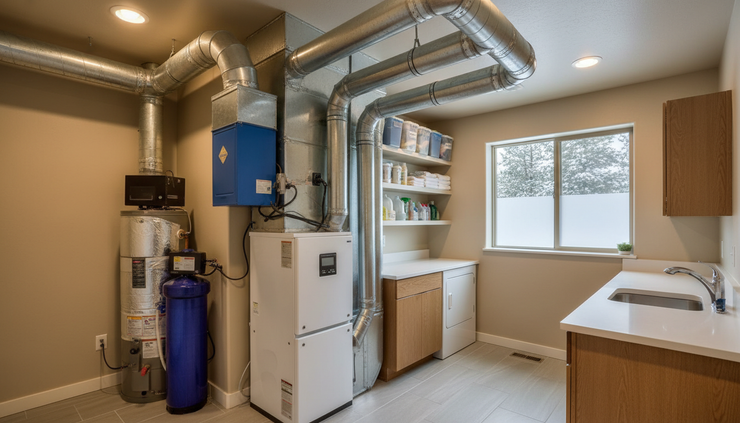
A dual-fuel system pairs an electric heat pump with a gas furnace. The heat pump handles milder winter weather. The furnace takes over when temperatures drop below a set point or when gas heat becomes more cost-effective.
This setup can make a lot of sense in Colorado.
On sunny winter days or during shoulder seasons, the heat pump can heat efficiently. During a bitter cold snap, the furnace steps in. You get the benefits of both systems without asking either one to do every job.
A dual-fuel system may cost more upfront than a simple furnace replacement. It also needs controls set correctly. If the switchover temperature is wrong, the home may use the less cost-effective heat source too often.
Still, for homeowners deciding between all-electric heat and a traditional gas furnace, dual fuel can be a practical middle ground.
Questions to ask before choosing
Before getting quotes, gather a few facts about the home. Better information leads to better recommendations.
Ask these questions:
What fuel do I use now?
How old is my furnace or AC?
What were my highest winter utility bills?
Does the home have comfort problems in certain rooms?
Do I have enough electrical capacity for a heat pump?
Are my ducts sealed and sized well?
How often does my area drop below 10°F?
Am I planning insulation or air sealing upgrades?
When comparing quotes, ask each contractor to explain:
The heat pump’s cold-weather capacity
The backup heat source
The expected switchover temperature
Any needed electrical work
The maintenance schedule
How the system will handle summer cooling
Warranty coverage for major parts
If someone recommends equipment without looking closely at the home, be cautious. Square footage alone is not enough.
The best choice for Colorado winter heating
If the choice is heat pump vs furnace for Colorado winters, start with the climate and the house, not the equipment brochure.
A heat pump is a strong option when winters are moderate enough, the home holds heat well, and electricity costs make sense. It becomes even more attractive if the existing AC needs replacement or the home uses propane or electric resistance heat.
A furnace is still hard to beat for deep cold, fast recovery, and homes with high heat loss. In mountain areas or drafty older homes, it may remain the more reliable primary heat source.
For many Colorado homes, the most balanced answer is a cold-climate heat pump with furnace backup. It can lower fuel use during milder weather while keeping the home comfortable when winter gets serious.
The smartest next step is simple: compare real numbers for your home. Look at fuel costs, insulation, ductwork, and local winter temperatures. Then choose the system that fits how your home actually lives through a Colorado winter.


Comments