
Colorado HVAC Tips for 5 to 9 PM Time of Use Energy Savings
The most expensive hours for many Colorado households are also the hours when dinner is cooking, laundry is running, the TV is on, and the HVAC system is trying to catch up after a hot or cold day. That 5 PM to 9 PM window can quietly shape the bill.
Time-of-use rates charge different prices for electricity depending on when power is used. During peak hours, electricity costs more because demand on the grid is higher. For homes with central air conditioning, a heat pump, or electric heating support, HVAC choices during those four hours can make a real difference.
The good news is that saving money does not require sitting in an uncomfortable house. It comes down to shifting some heating and cooling work earlier, using smarter settings, keeping equipment efficient, and making upgrades that fit Colorado’s weather.
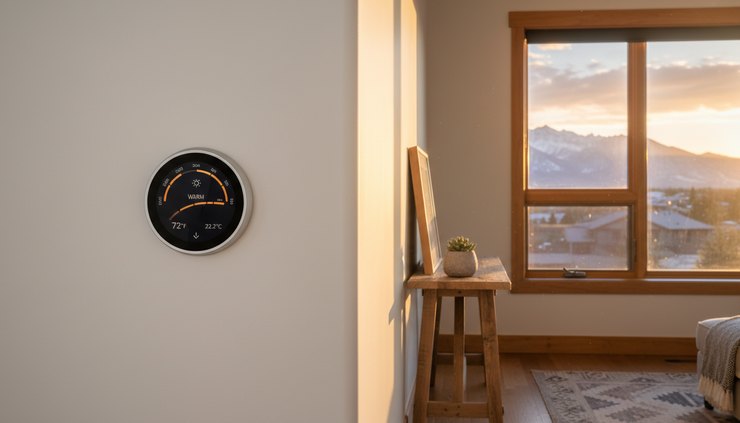
Why 5 PM to 9 PM matters for Colorado energy bills
Time-of-use pricing is designed to encourage people to use less power when the grid is under the most stress. In Colorado, that often lines up with the early evening.
During these hours, many homes are active at the same time:
Air conditioners are still running after a sunny afternoon.
Heat pumps or electric furnaces may start working harder in winter.
Ovens, dishwashers, washers, and dryers come on after work.
TVs, lights, and electronics add more demand.
Electric vehicles may begin charging unless scheduled for later.
HVAC can be one of the largest electric loads in a home. A central air conditioner or heat pump may run for long cycles if the home gained heat all afternoon. In winter, a heat pump may use backup electric resistance heat if the thermostat jumps several degrees at once.
That means the goal is simple: reduce heavy HVAC operation between 5 PM and 9 PM without giving up comfort.
Rates vary by utility and plan, so check the current rate schedule from the electric provider. Some Colorado customers have different peak periods by season, weekday, or program. The strategy still holds. If peak prices rise in the evening, move as much heating and cooling as possible outside that window.
Start with a simple time-of-use plan
A good HVAC plan has three parts: prepare the house before peak hours, coast through the peak window, and avoid a rebound right after 9 PM.
Pre-cool before 5 PM on hot days
On summer afternoons, the house often absorbs heat through windows, the attic, walls, and sun-facing rooms. If the thermostat waits until 5 PM to catch up, the air conditioner may run during the most expensive hours.
A better approach is to lower the setpoint slightly before peak begins. For example, a household that prefers 74°F in the evening might cool to 72°F or 73°F between 3 PM and 5 PM. Then, from 5 PM to 9 PM, the thermostat can rise a few degrees.
The house becomes a thermal battery. It stores cool air and cooler surfaces before electricity gets more expensive.
Do not overdo it. Dropping the thermostat too far can waste energy and make the system run nonstop. The right amount depends on insulation, windows, sunlight, and equipment size. Start with a small shift and adjust from there.
Use a higher cooling setpoint during peak hours
During 5 PM to 9 PM, raise the cooling setpoint by 2°F to 4°F if the home stays comfortable. A typical peak-hour cooling schedule might look like this:
Time | Cooling setpoint | Goal |
2 PM to 5 PM | 72°F to 74°F | Cool the home before peak pricing |
5 PM to 9 PM | 76°F to 78°F | Reduce compressor run time |
After 9 PM | 74°F to 76°F | Recover slowly if needed |
Ceiling fans can help during the higher setpoint period. A fan does not lower room temperature, but it helps people feel cooler. Turn fans off when rooms are empty.
Window coverings also matter. Closing blinds on west-facing windows before late afternoon can reduce heat gain right when the home needs protection most.
Avoid big heat jumps in winter
Winter is different. Colorado evenings can cool quickly, especially along the Front Range and at higher elevations. If a heat pump or electric furnace raises the home from 62°F to 70°F right at 5 PM, it may use a lot of peak-hour electricity.
Try warming the home before peak instead. If the preferred evening temperature is 68°F, bring the house close to that temperature before 5 PM. Then hold steady or allow a slight setback until 9 PM.
For heat pumps, this matters even more. Large thermostat jumps can trigger auxiliary heat, which uses much more electricity than normal heat pump operation. In many homes, a steady schedule beats aggressive setbacks.

Set the HVAC system to work smarter during peak hours
Small setting changes can lower peak use without major upgrades. The key is to manage comfort before the system starts working hard.
Use the thermostat schedule instead of manual changes
Manual thermostat changes often happen too late. Someone gets home, feels warm or cold, and makes a large adjustment. The HVAC system responds by running hard during the peak window.
A schedule prevents that pattern. Set the thermostat to make gradual changes before 5 PM. Many smart thermostats also let users create different schedules for weekdays and weekends, which helps if the time-of-use plan only applies on certain days.
Good schedule habits include:
Start pre-cooling or pre-heating 1 to 3 hours before peak pricing.
Set the peak-hour temperature slightly less aggressive.
Bring the home back to normal slowly after 9 PM.
Avoid frequent manual overrides.
Use vacation mode when away for more than a day.
Keep the fan setting on auto
The thermostat fan setting can cause hidden energy use. In `On` mode, the blower runs continuously. In `Auto` mode, it runs only when heating or cooling is active.
For many homes, `Auto` saves energy. It also avoids pulling warm attic or duct air into living spaces when the air conditioner is not cooling.
There are exceptions. Some households use continuous fan operation for air mixing or filtration. If that is needed, a variable-speed blower or smart circulation setting may use less energy than constant full-speed fan operation.
Reduce other heat sources during summer peak
HVAC does not work alone. In summer, appliances can add heat to the home during peak hours. That makes the air conditioner work harder.
Helpful evening changes include:
Run the dishwasher after 9 PM if noise is not a problem.
Use the microwave, outdoor grill, or air fryer instead of the oven.
Wash and dry clothes outside peak hours.
Turn off unnecessary lights, especially older bulbs.
Delay EV charging until off-peak hours.
These habits reduce direct electricity use and the heat the cooling system must remove.
Use smart thermostats for more than convenience
A smart thermostat is one of the most useful tools for time-of-use rates because it can manage schedules with less effort. The savings come from the settings, not from the device alone.
Look for features that support time-based control:
Custom daily schedules
Remote app control
Geofencing, if household routines vary
Heat pump auxiliary heat lockout or alerts
Runtime reports
Utility demand response compatibility, if offered and desired
Smart thermostats can also show how long the HVAC system runs each day. That feedback helps spot problems. If runtime suddenly rises after a filter change was missed, a window was left open, or outdoor temperatures changed only slightly, the data gives an early clue.
For Colorado households with heat pumps, thermostat setup deserves extra care. The installer should configure the thermostat for the equipment type, backup heat source, and balance point strategy. A poorly configured thermostat can use backup heat too often, especially during cold evenings.

Consider upgrades that reduce evening HVAC demand
Some improvements lower energy use all day. Others are especially helpful during peak pricing because they reduce long HVAC cycles between 5 PM and 9 PM.
High-efficiency heat pumps and air conditioners
Older single-stage systems turn fully on or fully off. Newer high-efficiency systems may use variable-speed or two-stage operation. These systems can run longer at lower output, hold steadier temperatures, and avoid large power spikes.
For air conditioning, efficiency ratings help compare systems, but sizing and installation matter just as much. An oversized system may short-cycle. An undersized system may run constantly during peak heat. A proper load calculation is better than replacing equipment based only on the old unit size.
For heat pumps, cold-climate models can perform better in low temperatures than older designs. They can be a strong fit for many Colorado homes, especially when paired with good insulation and smart controls.
Better insulation and air sealing
The cheapest peak-hour energy is the energy the house does not need. Air sealing and insulation reduce heat gain in summer and heat loss in winter.
Common problem areas include:
Attic hatches
Recessed lights below attics
Rim joists
Leaky ducts in unconditioned spaces
Weatherstripping around doors
Gaps around plumbing and wiring penetrations
These upgrades help the home coast through the 5 PM to 9 PM window. A tighter home loses comfort more slowly, so the HVAC system can rest longer during expensive hours.
Duct sealing and balancing
Duct leaks waste conditioned air before it reaches the room. In some homes, ducts run through attics, crawl spaces, or garages. If those ducts leak, the system may cool or heat spaces nobody uses.
Duct balancing can also help. If one west-facing bedroom gets hot every evening, the thermostat may call for cooling even when the rest of the home feels fine. Improving airflow to problem rooms can reduce whole-house runtime.
Zoning and mini-splits
Zoning lets different areas of a home condition separately. Ductless mini-splits can do the same for additions, garages converted to living space, or rooms that never feel right.
This helps time-of-use savings because the system does not have to overcool or overheat the whole house to fix one area. During peak hours, occupied rooms can stay comfortable while unused rooms drift a few degrees.
Evaporative cooling where it fits
Colorado’s dry climate can make evaporative cooling useful in some areas. These systems use water and airflow instead of a traditional compressor, so they can use less electricity than central air conditioning.
They are not right for every home or every day. Smoke, high humidity, maintenance needs, and indoor air quality concerns can limit their use. When conditions are right, they can reduce compressor-based cooling during peak summer evenings.
Maintenance is a peak-hour savings tool
Regular maintenance often sounds like a comfort or reliability issue. It is also a cost issue. A dirty or neglected HVAC system needs more runtime to do the same job, and that extra runtime may land during peak hours.
Replace filters before they become restrictive
A clogged filter reduces airflow. Low airflow can make an air conditioner freeze, a furnace overheat, or a heat pump run inefficiently.
Check filters monthly during heavy heating or cooling seasons. Replace them based on the filter type, home conditions, pets, dust, and manufacturer guidance. Do not assume a thicker or higher-rated filter is always better. Some dense filters restrict airflow if the system was not designed for them.
Keep outdoor units clear
Air conditioners and heat pumps need outdoor airflow. Keep leaves, cottonwood fluff, weeds, and snow away from the unit. Leave clearance around the sides and top based on manufacturer guidance.
After spring storms or fall leaf drop, a quick visual check can prevent poor performance. In winter, clear snow buildup around heat pumps so they can breathe.
Schedule professional service before peak seasons
A technician can check items that homeowners should not guess at, such as refrigerant charge, electrical components, blower operation, combustion safety for gas furnaces, and heat pump defrost operation.
Good timing helps. Schedule air conditioning service before the hottest part of summer and heating service before winter cold settles in. Waiting until equipment struggles can mean higher bills and fewer appointment options.

Colorado examples that show how small changes add up
The following examples are composites based on common Colorado home situations. They show practical choices rather than guaranteed savings. Actual results depend on utility rates, weather, equipment, insulation, and household habits.
A Denver bungalow shifted cooling earlier
A family in an older Denver bungalow had a familiar summer problem. The home felt fine at lunch, warm by 4 PM, and uncomfortable by dinner. Their air conditioner ran hardest from 5 PM to 8 PM.
They changed three things. They closed west-facing blinds by midafternoon, pre-cooled the home before 5 PM, and raised the thermostat during peak hours. They also stopped using the oven on hot weekdays.
The house still warmed slightly in the early evening, but it stayed comfortable. The biggest change was that the air conditioner no longer started its hardest work right when electricity cost more.
A Fort Collins townhome reduced heat pump backup use
A townhome owner in Fort Collins used a heat pump with electric backup heat. On cold evenings, they often turned the thermostat up several degrees after arriving home. The thermostat responded by bringing on auxiliary heat.
The fix was a steadier schedule. The home warmed gradually before peak hours, then held a modest setpoint through the evening. The thermostat settings were adjusted so backup heat did not come on unless truly needed.
Comfort improved because the home no longer swung between chilly and overly warm. Peak-hour electricity use became more predictable.
A Colorado Springs ranch found a duct problem
A ranch-style home in Colorado Springs had one hot bedroom that drove the cooling schedule. The thermostat was in a central hallway, but the household kept lowering the setpoint because the bedroom stayed warm after 5 PM.
An HVAC visit found weak airflow to that room and leakage in a duct run. After sealing and balancing, the room stayed closer to the rest of the home. The family no longer had to cool the whole house extra just to fix one space.
This is a common lesson: comfort problems often look like thermostat problems, but the cause may be airflow.
A practical evening checklist
Use this checklist to build a routine around the 5 PM to 9 PM spike.
Before 5 PM
Pre-cool or pre-heat gently.
Close sun-facing blinds in summer.
Run laundry, dishwashers, and other large electric loads earlier if possible.
Make sure the thermostat schedule is active.
Turn ceiling fans on only in occupied rooms.
From 5 PM to 9 PM
Raise the cooling setpoint or avoid large heating increases.
Keep doors and windows closed while HVAC is running.
Avoid oven use on hot days.
Delay EV charging when practical.
Resist large thermostat overrides.
After 9 PM
Return to normal comfort settings gradually.
Run delayed appliances if needed.
Use cooler outdoor air when conditions are safe and air quality is good.
Check thermostat reports for long runtimes or unusual patterns.
The main takeaway
Time-of-use rates reward homes that plan ahead. For HVAC, that means doing some heating or cooling before the 5 PM to 9 PM peak, keeping settings steady during expensive hours, and making sure equipment does not waste energy because of dirt, duct leaks, or poor controls.
Start with the no-cost steps: adjust the thermostat schedule, close blinds, shift appliance use, and check the filter. Then look at smart thermostats, duct fixes, insulation, and efficient equipment when it is time to upgrade.
A comfortable Colorado home does not need to run its HVAC system hardest when electricity costs the most. A few well-timed changes can make the evening spike easier on both the grid and the monthly bill.


Comments